
Reviewed · PORT LOUIS STREET FOOD TOURS
Mauritius: Port Louis Street Food City Tour
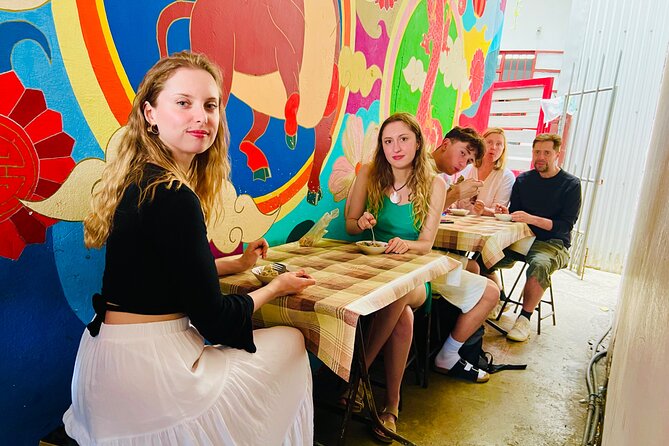
Port Louis makes its best first impression through food. On this three to four-hour walk, you move from the Caudan Waterfront area into the city’s market streets, Chinatown, historic religious sites, and leafy Company Garden while tasting about eight dishes along the way. Gato pima, the crisp split-pea and chili fritter, is one of the local highlights.
I like the way this tour connects food with the people and places that shaped Mauritius. I also like the small-group limit of 10 participants, plus the flexibility shown by guide Dourvesh, who adjusts the walk to suit your interests. The main consideration is that this is a walking tour through busy city streets, so it suits you best if you are comfortable on your feet and open to strong flavors, crowded markets, and a steady three-hour outing.
Key points at a glance
- Taste about eight dishes: Snacks, lunch, food tastings, and bottled water are included in the price.
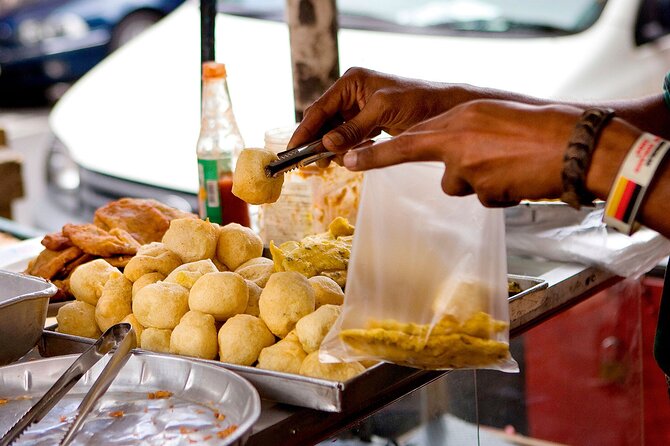
- Try genuine Mauritian street food: Gato pima combines soaked split peas, spring onions, and green chilies in a small fried bite.
- See Port Louis through several cultures: Indian, Chinese, African, Creole, and Islamic influences appear in the food, buildings, and places of worship.
- Visit the Aapravasi Ghat site: This UNESCO World Heritage Site tells the story of the indentured labor system that followed slavery.
- Explore old Chinatown shops: Some businesses occupy tiny, dark premises that preserve the district’s older character.
- Keep the group small: The tour allows a maximum of 10 people, a useful size for a food walk in crowded streets.
Why this Port Louis food walk works
A food tour can easily become a parade of snacks with a few facts added on. This one has a stronger shape. You walk through Port Louis while learning how Mauritius became a meeting place for Indian, Chinese, African, Creole, and Islamic traditions.
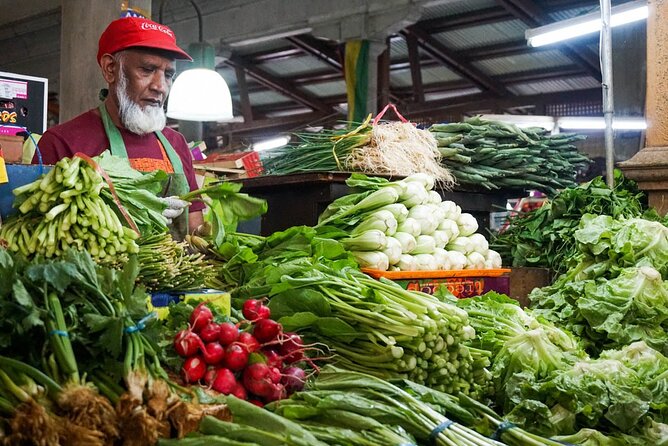
That matters because the food makes more sense when you see the city around it. The central market is not simply a place to grab lunch. It is part of the daily rhythm of Port Louis, with fruit, herbs, spices, and other goods packed into a noisy, colorful setting. Chinatown is not only a restaurant district. It reflects generations of Sino-Mauritian trade and family businesses.
The tour costs $49.40 per person. For that price, you receive a local guide, bottled water, snacks, lunch, and several tastings, as well as visits to major city sights. If you already plan to eat lunch in Port Louis and explore the area independently, the price is less of a bargain. If you want food, background, and a planned route in one outing, it is a fair value.
You also avoid the guesswork that can come with ordering unfamiliar street food on your own. Dourvesh has been praised for offering the right amount of information, leaving some time for independent looking, and adapting the experience to personal interests. That balance is useful in a city where you may otherwise rush past details or hesitate at a crowded food stall.
More port louis street food tours in Mauritius:
- Port Louis: Street Food & City Tour
★ 4.7 · 518 reviews - Port Louis: Street Food & City Tour
★ 4.9 · 377 reviews - Port-Louis Street Food Tour
★ 5.0 · 264 reviews
Starting near the Caudan Waterfront
The experience begins in the Port Louis area, with the meeting point given as IBL House. The tour information also describes the start near the Caudan Waterfront, so check the exact meeting instructions after booking and allow time to find the correct entrance.
From there, the walk leads into central Port Louis. You are not being driven from one attraction to the next. The city itself is the connecting thread, with streets, shopfronts, food smells, old buildings, and public spaces filling the gaps between formal stops.
The start time is 10:00 am. That places the tour in the middle of the city’s daytime activity, when the market and commercial streets are operating. It also means you should eat lightly beforehand, since snacks and lunch are included and the tastings add up quickly.
One practical point: hotel pickup and drop-off are not included. You need to reach the meeting point yourself, and the tour finishes back there. The activity is near public transportation, which helps if you are staying outside central Port Louis.
Aapravasi Ghat and the story of indentured labor
The first major stop is Aapravasi Ghat, where the modern indentured labor diaspora began. The site covers about 1,640 square meters and preserves the remains of the immigration depot used from the nineteenth century into the early twentieth century.
In 1834, the British Government chose Mauritius as the first location for its attempt to replace enslaved labor with what it called free labor. Between 1834 and 1920, nearly half a million indentured laborers arrived from India at Aapravasi Ghat. Some worked on Mauritius sugar plantations, while others were sent onward to Réunion Island, Australia, southern and eastern Africa, and the Caribbean.
The site gives the food tour a serious historical foundation. Indian influence in Mauritius is not an abstract cultural note. It is tied to a huge movement of people, labor, families, language, religion, and cooking traditions.
You have about 30 minutes here, with admission included. That is enough time for an introduction and a look at the preserved structures, but it is not a long museum visit. If you want to study every display in detail, you may wish to return independently.
Jummah Mosque and Port Louis architecture
The short stop at Jummah Mosque adds another layer to the city’s story. The mosque dates from the 1850s and combines Indian, Creole, and Islamic architectural elements.
The building also contains the remains of Jamal Shah, a religious figure from Kutch in India, in a marble tomb beside the mosque. Even with only about 10 minutes scheduled here, the stop helps you notice how several design traditions meet in one Port Louis building.
This is a brief visit rather than an extended architectural tour. The value comes from seeing the mosque as part of the city’s living fabric, not as an isolated monument. Listen closely to the guide, since the short stop does not leave much room for a long explanation or an unhurried examination of every detail.
A few more Mauritius trips to weigh up
- Mauritius: Port Louis Street Food Walking Tour
★ 4.5 · 93 reviews - Mauritius: Snorkeling with Turtles & Port Louis Street Food
★ 4.4 · 61 reviews - Mauritius: Sights of the South Private Tour with Rum Tasting
★ 4.7 · 42 reviews - Mahebourg Village Food Tour
★ 5.0 · 35 reviews
Chinatown’s old shops and food traditions
Chinatown receives the longest scheduled visit, about one hour. That makes sense, since this is both a cultural stop and a food stop.
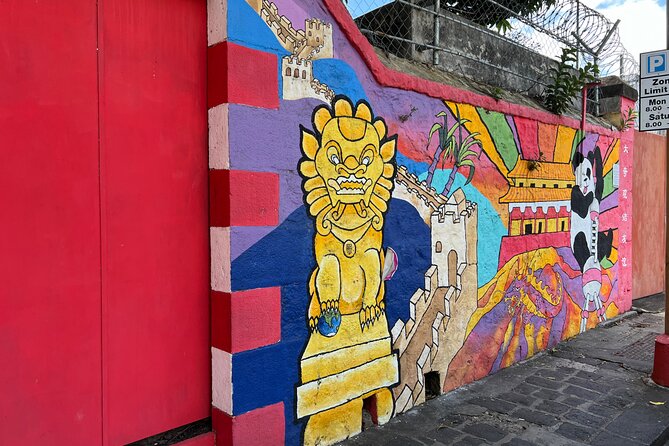
The district contains shops that have operated for generations, including small, dark retail premises that have changed little over time. Some Chinese families have kept their businesses in older buildings rather than moving into newer commercial spaces. The result is a district with plenty of contrasts: aging shopfronts beside newer structures, traditional trade beside modern retail.
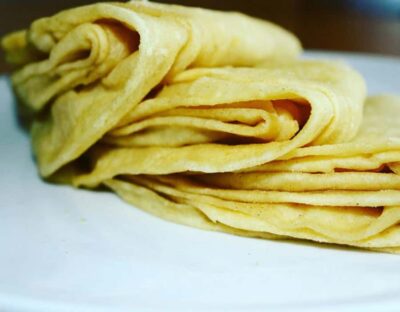
Mauritius’s Chinese food culture is linked in part to Hakka traditions. Here you can try treats derived from Hakka Chinese dishes and see how food, migration, and commerce overlap.
Chinatown once served as a major trade center in Mauritius. Its commercial role declined as supermarkets spread across the island, and some of its old importance faded. That decline is part of what makes the district interesting today. You are seeing an active neighborhood with remnants of an older business world, not a polished heritage set built only for sightseeing.
The street setting can be cramped, and the older shops may not look impressive at first glance. Give them time. Their value lies in continuity and atmosphere, especially when your guide explains the families, trades, and food customs connected with the area.
Gato pima and the Port Louis food stops
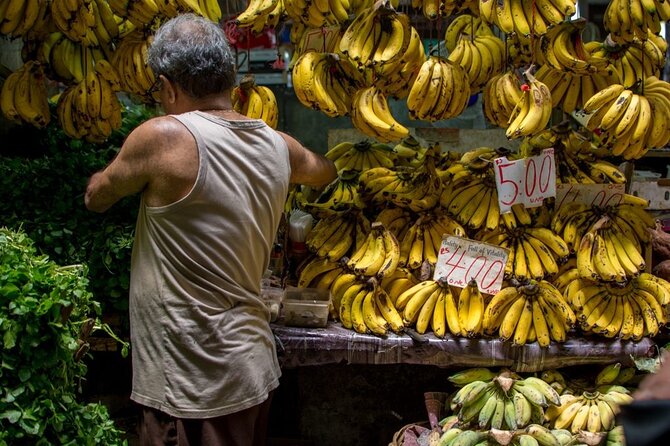
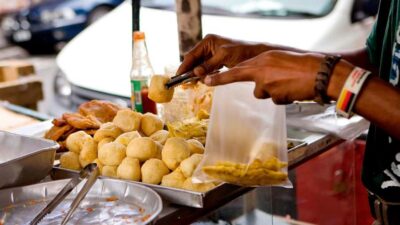
The central market is where the food side of the tour becomes most vivid. You can expect fruit, herbs, spices, and other market goods, along with the sights and sounds of everyday commerce.
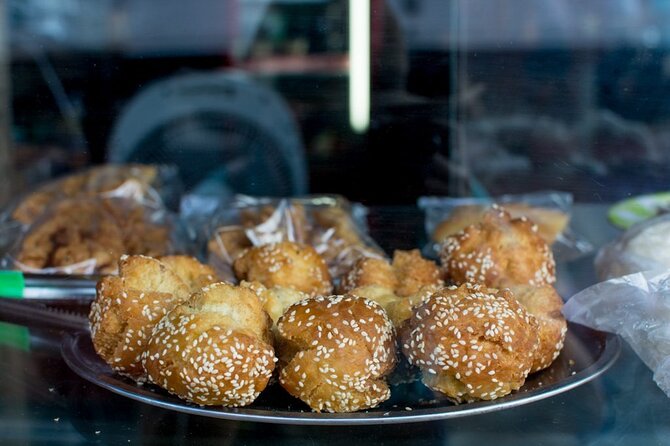
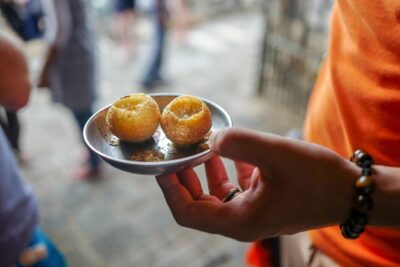
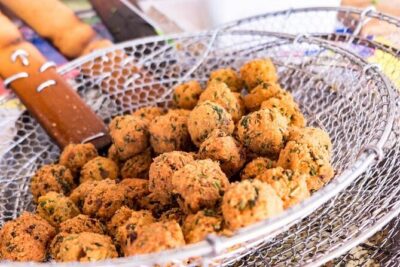
One specific snack to look for is gato pima, often described as a chili bite. It is made with soaked split peas, spring onions, and green chilies, then deep-fried. The flavor is lively and the chili gives it a sharp finish.
Gato pima is a good example of why a guided food walk can be more useful than simply buying a random fried snack. You learn what you are eating, how it fits into Mauritian food culture, and what to expect before taking a bite.
The tour includes about eight dishes in total. The supplied details do not identify every item, so you should not expect a fixed menu you can fully plan around in advance. Instead, think of the food as a broad sampling of Mauritian and Sino-Mauritian tastes, with snacks and lunch included.
If you have allergies, dietary restrictions, or strong dislikes, tell the guide when the tour begins. The experience has been described as adaptable to personal interests, but no specific dietary policy is provided. Do not assume every tasting can be replaced.
Company Garden and the huge banyan trees
Les Jardins de la Compagnie, or Company Garden, gives your legs and senses a break from the market streets. Its large banyan trees form the main attraction, with hanging roots and broad branches creating a striking public space in the center of the city.
The garden also contains statues, fountains, and benches. It began as a vegetable garden for the French East India Company, then became one of Port Louis’s most appealing open spaces. Statues by local sculptor Prosper d’Épinay and tributes to the much-loved musician Ti Frère add local character.
You have about 20 minutes here. That is enough for a walk beneath the banyans, a few photographs, and a pause after the food stops. It is not enough for a long, slow garden visit, so treat this as a pleasant part of the route rather than the main purpose of the tour.
The garden is considered safe and attractive during the day. The information provided advises avoiding it at night, when it is a known hang-out for sex workers and people using drugs. That warning is relevant if you plan to return after dinner, but it does not alter the daytime visit included in this tour.
How much walking and food should you expect?
The experience lasts roughly three to four hours and ends back at the meeting point. Since the route links several central sights on foot, you should expect a steady city walk rather than a short stroll between food counters.
The streets can be crowded, especially around the market and Chinatown. Wear comfortable shoes and keep your belongings secure in busy areas. The group limit of 10 helps, but it does not remove the normal challenges of walking through a working city center.
The food volume is another practical issue. With about eight dishes plus lunch and snacks, you may be full by the end. That is part of the value, but it also means the tour is not ideal if you want only one or two light samples.
Food lovers should arrive hungry. If you have a small appetite, share portions when possible and tell the guide early. One of the useful strengths of the experience is its relaxed pace, with enough room to spend a little longer at a place that catches your interest.
The guide makes the difference
The guide is central to this experience because the route crosses food, religion, colonial history, migration, and local business life. Dourvesh is specifically associated with the tour and has been praised for giving clear information without overwhelming the walk.
That balance is worth noting. A guide who talks without pause can make a food tour feel like a lecture. A guide who says too little leaves you with a set of disconnected snacks. The best moments here appear to come from moving between both modes: useful explanation at historic sites, then time to look, taste, and follow your own curiosity.
Dourvesh has also been described as responsive to different interests. That does not mean you receive a private tour, but it suggests that you can ask questions and shape some of the conversation.
The small group matters too. With no more than 10 participants, it should be easier to hear the guide, stay together in narrow streets, and ask about food or buildings without competing with a large crowd.
Who should book this Port Louis tour?
I would choose this experience if you want a first look at Port Louis that combines eating with context. It is especially useful early in a Mauritius visit, since it can help you understand the island’s Indian, Chinese, African, Creole, and Islamic influences before you explore more widely.
It also suits people who are unsure about ordering local food on their own. You get guidance, several tastings, and a route through places you might otherwise pass without understanding.
You may want a different plan if you dislike walking in crowded streets, need a guaranteed menu, or prefer a quiet sit-down meal. The tour is also less suitable if you want to spend a long time inside Aapravasi Ghat, Jummah Mosque, or the garden, since each stop is part of a wider route.
The price is easiest to justify when you count the included food, bottled water, guide, and admissions together. It is not the cheapest way to eat in Port Louis, but it offers a useful introduction without requiring you to organize each stop yourself.
Booking details and cancellation
The tour starts at 10:00 am, meets at IBL House in Port Louis, and returns to that meeting point. Confirmation is provided at booking, and a mobile ticket is available.
Free cancellation applies when you cancel at least 24 hours before the local start time. Changes or cancellations made inside that window are not refunded. The tour also requires good weather and a minimum number of participants. If poor weather or low enrollment cancels the outing, you are offered another date or experience, or a full refund.
Should you book it?
Book this Port Louis street food tour if you want food with a sense of place, not just a list of dishes. The mix of Aapravasi Ghat, Jummah Mosque, Chinatown, the central market, and Company Garden gives the meal a clear connection to Mauritius’s past and present.
I would be especially keen to book it for a first Port Louis visit, when a local guide can help you get your bearings and point out details you might miss alone. The strongest reasons are the small group, the eight or so tastings, the included lunch, and Dourvesh’s reported ability to keep the walk informative without making it stiff.
Skip it if your priority is a long museum visit, a private food itinerary, or a fully specified menu. For most people who want three hours of eating, walking, and city history at a moderate price, it is a well-balanced introduction to Port Louis.
FAQ
Where does the Port Louis street food tour start?
The meeting point is IBL House in Port Louis. The experience is also described as beginning near the Caudan Waterfront, so check the precise meeting instructions after booking.
What time does the tour begin?
The tour starts at 10:00 am local time.
How long does the experience last?
It lasts approximately three to four hours.
Where does the tour finish?
The activity ends back at the meeting point.
What food is included?
Snacks, lunch, food tastings, and bottled water are included. The tour includes about eight different dishes, including gato pima.
What is gato pima?
Gato pima is a deep-fried Mauritian chili bite made with soaked split peas, spring onions, and green chilies.
How many people can join the tour?
The maximum group size is 10 participants.
Is hotel pickup included?
No. Hotel pickup and drop-off are not included, though the meeting point is near public transportation.
Can I cancel for a refund?
Yes. You can receive a full refund if you cancel at least 24 hours before the experience start time. Poor weather or failure to meet the minimum number of participants may also lead to a replacement date, another experience, or a full refund.
More Food in Mauritius
- Mauritius: Catamaran Sunset Cruise with Food, Drinks & DJ
★ 4.0 · 28 reviews - Street Food Private Tour in Port Louis
★ 4.5 · 23 reviews - Grand Bay Food Tour
★ 5.0 · 21 reviews - Grand Baie: Guided Walking Food Tour
★ 4.9 · 20 reviews
Just added around Mauritius
- Whale & Dolphins Swimming – Private Speedboat Exclusive Tour★ 4.2 · 3 reviews
- Black River: Guided Hike in the Black River Gorges Valley★ 4.0 · 6 reviews
- Walking under the sea in Mauritius with transfer★ 3.4 · 7 reviews
- Mauritius: Watersport Adventure Day with Lunch and Pickup★ 3.9 · 3 reviews
- Tea Route: Lake, Forest, Tea Plantation & 3 Course Lunch★ 3.6 · 7 reviews
- Mauritius: Private Full Day Tour with Entry Tickets & Lunch★ 4.4 · 12 reviews
- Unveiling the Ancient and Modern Port Louis – city tour★ 4.7 · 13 reviews
- Trou d’Eau Douce: Waterfall and Ile aux Cerfs Day Trip★ 4.6 · 9 reviews
Port Louis Street Food Tours, compared.

Browse the lists this tour appears in