
Reviewed · PORT LOUIS TOURS
ROUTE OF INDIAN SPIRITUALITY
The most revealing part of this three-hour private tour is not simply seeing temples. It is learning how Indian spirituality took root in Mauritius, how slavery shaped the island, and how festivals such as Maha Shivaratree, Cavadee, and Ganesh Chaturti still matter today. Guide Eric explains the symbols with a light touch, asking why Shiva has a blue neck, why a lingam is watered, and why Ganesh has one broken tusk.
I like the route for two clear reasons. First, it gives you three different temple visits instead of one quick photo stop. Second, it connects religious practice with Mauritian history and present-day life. The main consideration is time: three hours is enough for an introduction, but not for long visits or a broad tour of the whole island.
Key points to know before you book
- Three temples in about three hours: Visit the temple at Triolet, then two Tamil kovils at Cap Malheureux.
- A strong focus on meaning: Learn the stories behind Shiva, Ganesh, Muruga, lingams, and major religious festivals.
- Eric leads the discussion: The guide explains Hindu and Tamil traditions in clear, approachable language and connects them to Mauritius.
- A private experience: Only your group takes part, making it easier to ask questions and set the pace within the fixed route.
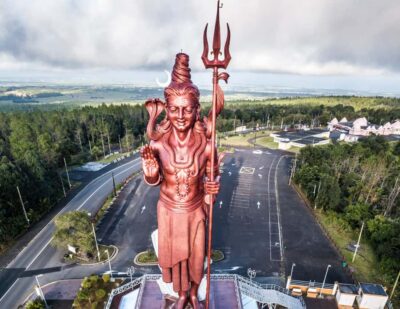
- A striking Muruga statue: One Cap Malheureux temple has a 15-meter statue modeled on the figure at Batu Caves in Kuala Lumpur.
- Good value for a focused outing: At $64.61 per person, the price covers a private, guided cultural experience rather than a simple temple transfer.
Why this temple route matters in Mauritius
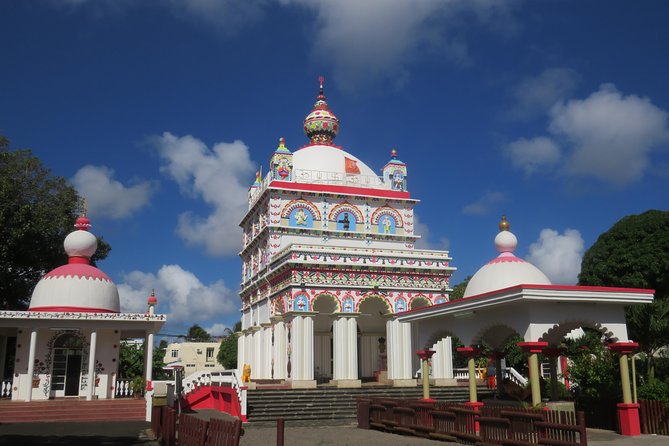
Mauritius is often sold through beaches, lagoons, and resort life. Those are real pleasures, but they tell only part of the island’s story. Indian spirituality is woven into Mauritian society, and this outing gives you a way to see that connection through living places of worship.
The route also raises useful questions instead of treating temples as pretty backdrops. You learn about deities, rituals, pilgrimage, and festivals, but you also look at the effects of slavery, migration, and cultural change. That makes the experience more useful than a sightseeing drive with a few dates attached.
Eric’s approach, based on the available description of the tour, is playful but respectful. That balance matters. Religious sites can be difficult to understand if every explanation is solemn and abstract. A question such as why Shiva has a blue throat gives you an easy way into a much larger set of beliefs and stories.
The tour also asks you to think about labels. Is a festival Hindu, Tamil, or both? What does Govinden celebrate? Why do people take part in Ganga Snan? These are not just trivia questions. They point to the way different communities and traditions have shaped Mauritian life.
Other Port Louis days people book alongside this one:
- Mauritius: Tamarind Falls Highlights 3-Hour Hiking Trip
★ 4.9 · 588 reviews - Mauritius: Exclusive South West Tour
★ 4.8 · 523 reviews - Port Louis: Street Food & City Tour
★ 4.7 · 518 reviews
Starting at Triolet and the first Maha Shivaratree pilgrimage
The first stop is the temple at Triolet, where the first Maha Shivaratree pilgrimage in Mauritius began in 1898. That detail gives the visit a strong historical anchor. You are not simply entering a temple and hearing a list of gods. You are seeing a place linked to a pilgrimage tradition that has continued to matter on the island.
The visit lasts about an hour, making it the main stop on the route. That extra time should allow Eric to explain the temple, its role in Mauritian Hinduism, and the stories connected with its deities. It is also the best part of the tour for asking questions, since the two Cap Malheureux visits are shorter.
Maha Shivaratree is associated with Shiva, one of the central figures in Hindu worship. The tour uses the festival to explain how religious observance works in Mauritius and why pilgrimage remains important. You may also hear about the lingam, which is continually watered during worship, and the symbolic reason behind that practice.
The explanations appear designed for people with little background. If you already know Hindu theology, you may find the presentation basic in places. For most visitors, that is a fair trade. The tour aims to make unfamiliar symbols understandable rather than assume you have studied them before.
Triolet is also a good place to consider the difference between seeing a temple and understanding one. A quick independent visit might give you architecture and atmosphere. This stop adds the stories, dates, and social meaning that make the building easier to read.
Two Tamil kovils at Cap Malheureux
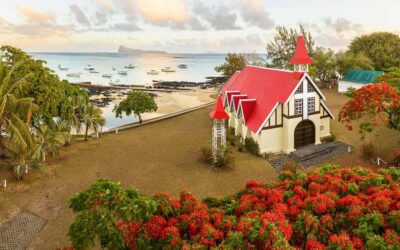
The second and third stops are at Cap Malheureux, in the north of Mauritius. Both are Tamil temples, known as kovils, but they offer different points of interest.
The first Cap Malheureux temple visit takes about 30 minutes. Eric covers its history, legends, and myths, so this is likely to be a compact explanation rather than a long ritual observation. The shorter format keeps the route moving, but it also means you should arrive ready to listen and ask focused questions.
The distinction between a temple’s formal history and its legends is useful. Religious places are understood through both recorded events and stories passed down through communities. The tour gives you room to consider how those forms of memory work together.
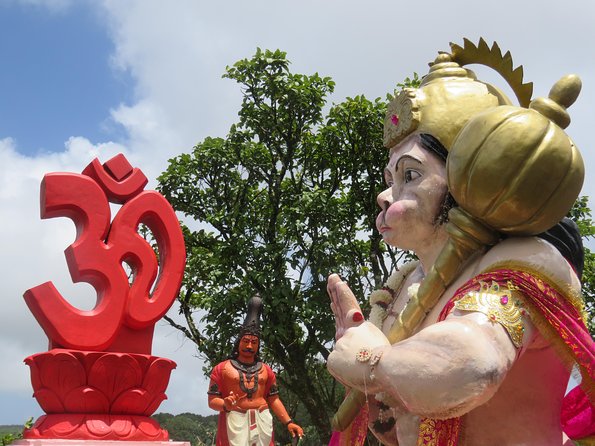
The second Cap Malheureux visit lasts around 15 minutes. Its main feature is a 15-meter statue of Muruga, a major Tamil deity. The statue is modeled on the famous Muruga figure at the entrance to the Batu Caves in Kuala Lumpur.
This is the route’s most obvious visual landmark, but the value is not limited to taking a picture. Muruga helps explain the Tamil religious presence in Mauritius and gives the second temple a distinct identity. If you know the Batu Caves statue, the comparison adds another layer. If you do not, the guide’s explanation can place the figure in a wider Tamil context.
The short stop is also the clearest limitation of the itinerary. You have time to see the temple and hear the main points, but not much room for a long, open-ended visit. Think of it as a focused introduction to two kovils rather than a slow study of temple art and ritual.
Shiva, Ganesh, Muruga, and the stories behind the symbols
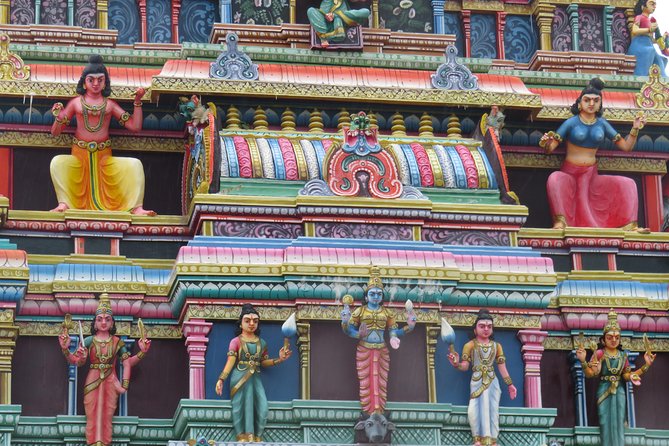
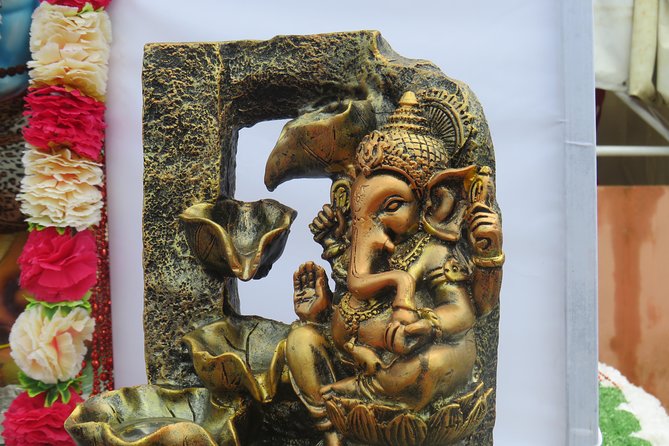
A useful feature of this outing is its attention to questions that many visitors have but might not ask. Why is Shiva’s neck blue? Why is a lingam kept under a constant flow of water? Why is one of Ganesh’s tusks broken?
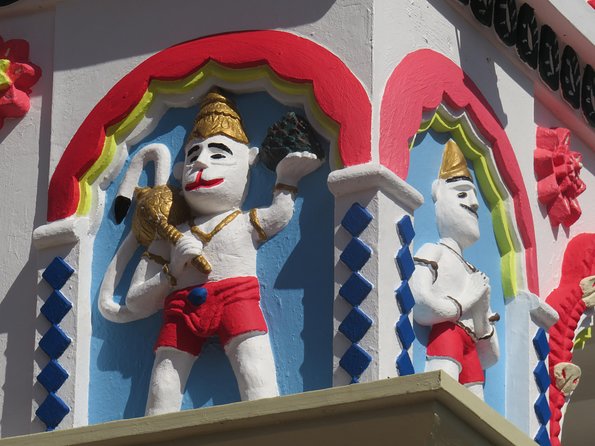
These questions help you look at temple imagery with more care. Instead of seeing a blue throat or a broken tusk as decorative details, you learn that each feature carries a story or religious meaning. That approach is especially helpful if you are new to Hindu traditions.
Ganesh, Shiva, and Muruga also give you a way to compare different parts of Indian spirituality. The tour does not treat all temples as interchangeable. It points you toward the different roles and stories associated with the deities, as well as the Tamil character of the kovils at Cap Malheureux.
I like this method because it keeps the discussion grounded. You are not expected to remember a long religious vocabulary list. You can start with one statue or ritual object in front of you, then connect it to a wider belief system.
The tone is meant to be playful, but respect remains important. That is a good fit for a private tour. You can ask basic questions without worrying about slowing down a large group, and you can explore the subjects that interest you most.
Same island, a completely different day out:
- Mauritius North: Private Paradise Tour with Gardens, Markets
★ 4.8 · 446 reviews - Port Louis: Street Food & City Tour
★ 4.9 · 377 reviews - Port-Louis Street Food Tour
★ 5.0 · 264 reviews - TAXI north guided tour.
★ 5.0 · 171 reviews
Festivals that connect worship with public life
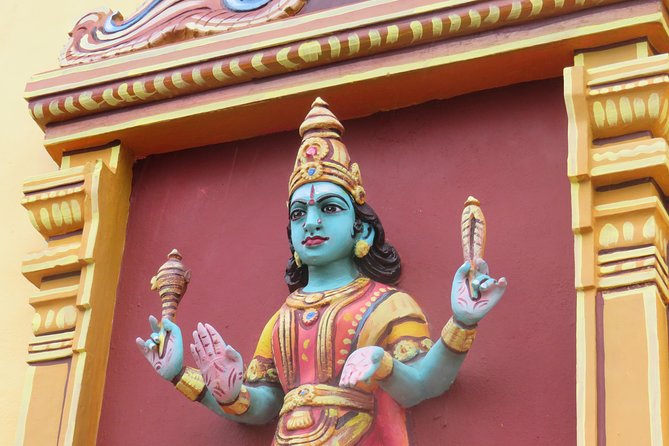
The route introduces several festivals and practices: Maha Shivaratree, Cavadee, Ganesh Chaturti, Ganga Snan, and Govinden. Each one opens a different window onto worship and community life.
Maha Shivaratree is especially important because Triolet is linked to the first pilgrimage of its kind in Mauritius in 1898. Cavadee and other Tamil observances help explain the role of Tamil communities and kovils. Ganesh Chaturti offers another way to understand devotion to Ganesh and the place of religious celebration in Mauritian society.
Ganga Snan points to ritual bathing, while Govinden adds another part of the religious calendar for Eric to explain. The experience is not only about memorizing festival names. It asks what people are celebrating, who takes part, and how these events affect society today.
The tour can also include attending or following processions and prayers on specific festival dates. This is an important qualification. Such participation is tied to the date of your visit, so it should not be treated as a guaranteed part of every morning tour.
If your schedule is flexible, festival timing could add a more active public dimension to the outing. If you visit on an ordinary day, the temple visits still provide the core experience, with the guide supplying the wider context.
From slavery to modern Mauritian identity
The discussion of slavery is one of the route’s most valuable features. Mauritius has a complicated past shaped by forced labor, migration, colonial rule, and the movement of communities across the Indian Ocean. The tour connects that past to the arrival and development of Indian religious traditions.
This gives you a better way to understand Mauritius as a society rather than as a resort destination. Religion is not presented as an isolated subject. It is tied to family, community, memory, public festivals, and the continuing question of how different traditions live together.
The tour also asks how culturally distant or close you may be to the practices you are seeing. That is a productive question for any visitor. You do not need to share the beliefs to recognize familiar human themes: pilgrimage, celebration, stories passed through generations, care for sacred places, and belonging to a community.
I would especially recommend this route if you want cultural context but prefer a small, conversational setting. A private tour gives you a better chance to ask how a festival works, why a symbol matters, or how traditions have changed over time.
Is $64.61 per person a fair price?
At $64.61 per person, this is not the cheapest way to spend three hours in northern Mauritius. You can see temples independently without paying an admission fee, since admission at the listed stops is free.
The price makes more sense when you consider what you are buying: a private guide, transportation between three sites, historical explanation, religious interpretation, and the chance to ask questions throughout. The tour is not charging you for entry tickets. It is charging for access to context.
For a private activity, the value improves if two or more people share the booking. Only your group takes part, so the experience should feel more personal than a large coach excursion. The published price is per person, though the total value will depend on your group size.
I would choose this tour if I wanted to understand what I was seeing. I would skip it if my main goal were simply to photograph temple buildings or fill a spare hour between beach plans.
The average booking lead time is about 40 days, which suggests you should not assume a last-minute place will be available. The experience starts at 9:00 am at La CroisetteMU on Chemin Vingt Pieds in Grand Baie and returns to the same meeting point.
Practical details that shape the morning
The outing lasts approximately three hours. That is a useful length for a cultural morning because it gives you more substance than a brief stop without taking over the whole day.
The meeting point is La CroisetteMU in Grand Baie. Since the tour returns there, you do not need to arrange a separate end point. The description also notes nearby public transportation, though no specific route or fare is provided.
A mobile ticket is available, and confirmation is sent when you book. Most people can participate, and service animals are allowed. The tour is private, which is helpful if your group has particular questions or wants a slower explanation at one stop.
The experience requires good weather. If poor weather causes cancellation, you are offered another date or a full refund. You can also cancel for a full refund if you do so at least 24 hours before the start time. Changes or cancellations inside that window are not accepted, and the local time controls the deadline.
Because the route visits active religious sites, you should approach each stop with patience and respect. The supplied information does not specify clothing rules, photography rules, or interior access, so ask Eric before taking pictures or entering any restricted area.
Who should book the Route of Indian Spirituality?
I recommend this tour to anyone who wants to understand the Indian and Tamil influence on Mauritius beyond food, place names, or festival photos. It is especially suitable for first-time visitors who want a clear introduction to Hindu deities, temple customs, and the island’s social history.
It also fits couples, families, and small groups who prefer a private conversation over a fixed lecture. Eric’s explanatory style, including the unusual questions about Shiva, Ganesh, and the lingam, should make the material approachable even if you know little about Hindu traditions.
The route is less suitable if you want an architectural tour, a long spiritual retreat, or extensive time at each temple. The final Cap Malheureux stop is only about 15 minutes, and the whole experience stays tightly focused on explanation and comparison.
Should you book it?
Book this experience if you want the northern part of Mauritius to make more sense. The three temples give you real places to look at, while Eric’s explanations connect them to pilgrimage, Tamil worship, Hindu stories, slavery, festivals, and modern Mauritian life.
Skip it if you are looking for a free-form temple visit or a full-day cultural tour. For $64.61 per person, the strongest value comes from the private format and the quality of the interpretation. If that is what you want, this is a thoughtful and efficient way to spend a morning.
FAQ
Where does the tour start?
It starts at La CroisetteMU, Chem. Vingt Pieds, Grand Baie 30517, Mauritius.
What time does the tour begin?
The tour starts at 9:00 am.
Where does the experience end?
It ends back at the meeting point at La CroisetteMU.
How long does the tour last?
The experience lasts approximately three hours.
Is this a private tour?
Yes. Only your group participates in the activity.
What temples are visited?
The route includes the temple at Triolet and two Tamil temples, or kovils, at Cap Malheureux.
Can I cancel for a full refund?
Yes. You can receive a full refund if you cancel at least 24 hours before the experience start time. If poor weather causes cancellation, you are offered another date or a full refund.
Just added around Port Louis
- Tea Route: Lake, Forest, Tea Plantation & 3 Course Lunch★ 3.6 · 7 reviews
- Unveiling the Ancient and Modern Port Louis – city tour★ 4.7 · 13 reviews
- Full Day Private car only Guided SOUTH WEST of Mauritius★ 4.5 · 8 reviews
- Private A/C CAR Guided FULL DAY tour North of Mauritius★ 4.0 · 5 reviews
- Full Day Shared Speed Boat in Ile Aux Cerfs Lunch & Transfer incl★ 4.0 · 6 reviews
- 8-Hour Private City and North Tour in Mauritius★ 4.5 · 4 reviews
- Mauritius Guided South Tour (Private)★ 5.0 · 9 reviews
- Mauritius Private South West Tour★ 5.0 · 3 reviews
Port Louis Tours, compared.
Port Louis and Northern Highlights Full-Day Trip
Read our review →
Browse the lists this tour appears in