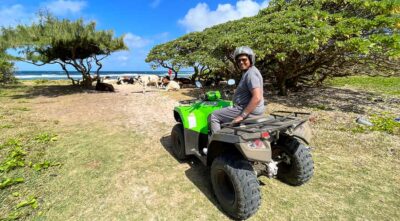
Reviewed · TOURS
Rodrigues Island – UNIVERS Tour
Rodrigues Island comes alive through ordinary work and shared skills on this small-group day out. You meet octopus fishermen, hear the island’s accordion music, learn sega-tambour, bake a pie, and try your hand at making a hat, basket, net, or fish trap. It is a cultural day built around doing, not just looking.
I like the small maximum of 12 people, which gives the guide room to explain things and lets you take part without feeling lost in a crowd. I also like the mix of food, music, craft, and village life. You get a hearty two-course lunch and a pie lesson, not just a parade of photo stops.
The main consideration is the pace. Seven hours is a full morning and afternoon, and the program includes several activities. You should also expect to pay separately for drinks, have moderate physical fitness, and accept that poor weather can affect the day.
Key things to know before you book
- Meet octopus fishermen at work: You see how this coastal trade fits into daily life on Rodrigues Island.
- Rivière Coco adds village context: The outing is not limited to one staged demonstration.
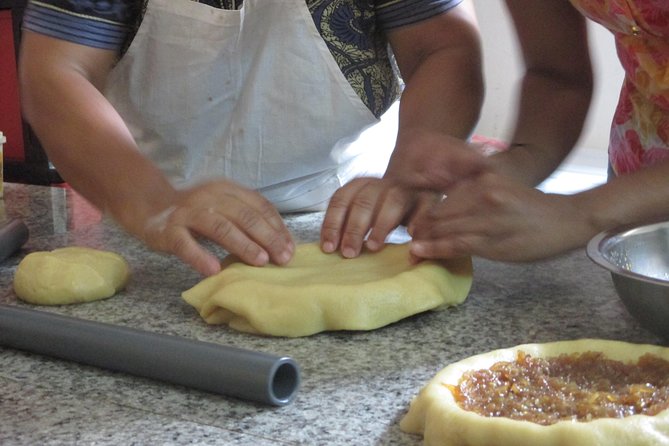
- Food is part of the lesson: You bake a pie and receive a two-course lunch, with drinks extra.
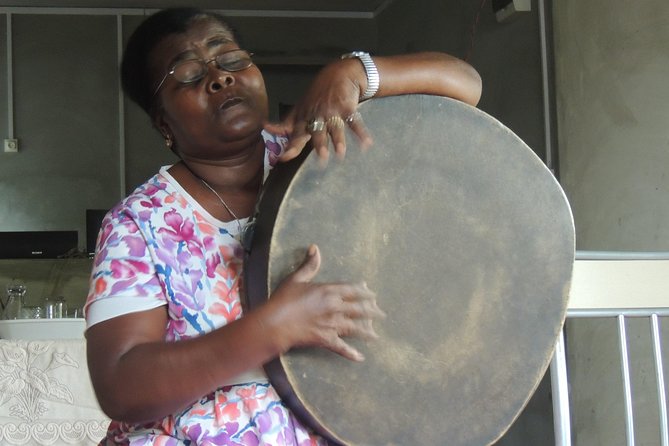
- Music becomes participation: You hear the story and sound of sega-tambour, then learn its dance.
- Choose a hands-on craft: Depending on the activity offered, you can make a hat, basket, net, or fish trap.
- The day stays personal: Pickup, a professional guide, and a maximum of 12 participants are included.
Why this Rodrigues Island day feels different
Many cultural tours keep you at a safe distance. You look at a costume, take a photograph, and listen to a short explanation before moving on. This outing takes another route. It uses work, food, music, and craft as the main way into island life.
That matters because traditions make more sense when you see how people use them. A fishing method is not just a display. A pie is not merely lunch. A drumbeat is more than background music. Each activity gives you a practical way to understand the people and routines of Rodrigues Island.
The tone also appears to depend heavily on the guide. Christian is specifically praised for being both serious about his work and genuinely interested in the island. That is useful here, since the day includes several different subjects. A good guide has to connect octopus fishing with village life, food with family customs, and sega-tambour with local identity.
You will be in a group capped at 12 people. That is small enough for questions and demonstrations to work well, while still being large enough to share the day with others. It is not a private tour, so you will not control every pause or activity. Still, the group limit is a real advantage for a hands-on program.
Other Mauritius days people book alongside this one:
- Mauritius: Ile Aux Cerfs Catamaran Trip w/ Lunch & Transfer
★ 4.3 · 1,922 reviews - Mauritius: Full-Day Catamaran Cruise to the Northern Isles
★ 4.7 · 1,798 reviews - Île aux Bénitiers: Snorkeling w/Dolphins Boat Tour & Lunch
★ 4.0 · 1,635 reviews
Meeting the octopus fishermen
The first activity focuses on the daily work of an octopus fisherman. This gives the tour a useful starting point because it presents Rodrigues through a real source of food and income rather than a polished attraction.
You can expect the guide to explain how fishermen spend their days and why this work matters to the island. The details provided do not specify the exact fishing site, season, equipment, or amount of walking, so you should not book this expecting a long boat trip or a guaranteed chance to catch anything. The value lies in seeing and discussing the work itself.
This stop may be especially worthwhile if you want to understand how island communities depend on the sea. It also sets up the rest of the day. You are not simply being told about Rodrigues culture in the abstract. You are looking at one daily activity, then moving toward food, music, and handmade objects that also belong to local life.
Because the tour requires moderate physical fitness, wear practical clothing and shoes. That advice is not a warning about strenuous hiking. It simply reflects a full day with several stops and activities, where you may be standing, moving around, and taking part rather than sitting in a vehicle the whole time.
Walking through Rivière Coco
The visit to Rivière Coco adds a village setting to the day. After learning about fishing, you get a broader look at one of the island’s communities and its everyday character.
A village visit can be more revealing than a list of monuments. You may notice how work, homes, food preparation, and local gathering places fit together. The tour description does not promise particular buildings or a fixed walking route, so I would treat Rivière Coco as a chance to see local surroundings with explanation, not as a formal sightseeing circuit.
This is also where the guide’s commentary matters. Live commentary is included during the tour, and the day is designed around stories about Rodrigues traditions. Ask questions as you go. The group size should make that possible, especially if you want to know more about the link between the village and the island’s fishing life.
Do not expect a free afternoon to wander at your own pace. The program moves through many activities in seven hours. That structure works well for first-time visitors who want a broad introduction, but it may feel busy if you prefer to spend a long time in one place.
The accordion and its singular tune
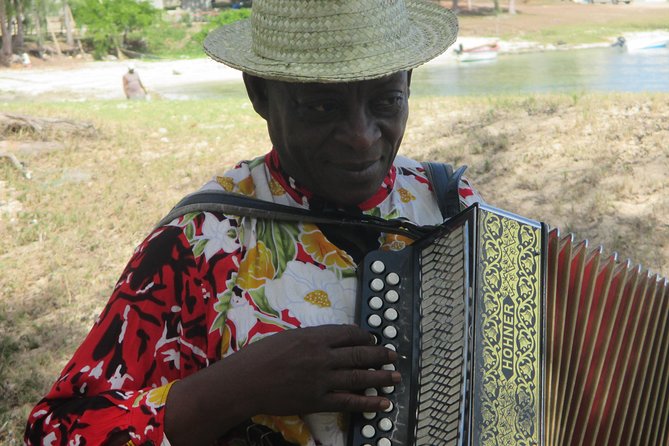
The accordion session brings in a musical tradition that is easy to overlook if you only focus on drums and dance. You learn about the instrument, its history on the island, and its distinctive tune.
This is the kind of small detail that can make a culture feel specific. Instead of hearing a general explanation about island music, you encounter one instrument and the role it has played in local life. The exact format is not stated, so it may be a demonstration, a talk, or both. Either way, it gives the day a quieter musical counterpoint before the more active sega-tambour segment.
I like this part because it broadens the picture of Rodrigues. The island’s musical traditions are not reduced to one performance. You get a sense that different sounds and instruments have their own place.
Same island, a completely different day out:
- Mauritius: Private Southwest Chamarel Highlights Tour
★ 4.8 · 1,427 reviews - Mauritius: Private South-West Nature & Viewpoints with Lunch
★ 4.8 · 1,129 reviews - Trou d’Eau Douce: 5 Island Adventure with BBQ & Snorkeling
★ 4.7 · 1,052 reviews - Mauritius: Private South Tour with Pickup
★ 4.9 · 940 reviews
Baking a pie, then sitting down to lunch
Food is one of the strongest parts of this outing because you do not only receive a meal. You learn how to bake a pie before sitting down to a hearty two-course lunch.
The pie lesson gives you something to do with your hands and something to remember after the tour. It also offers a window into home cooking and the practical skills passed between generations. The supplied information does not identify the pie’s filling or recipe, so do not assume a particular flavor or style. You can expect a lesson, but not a guaranteed recipe card to take home.
Lunch is included, and it is described as a two-course meal. Bottled water is included as well. Drinks beyond the included water are not covered, so bring some extra money if you want something else with your meal.
Vegetarian food is available if you request it at booking. Specific dietary needs should also be given in advance. That is important because this is a planned meal, not a food court where you can easily change your order at the last minute.
The meal also helps break up the day. With fishing, village exploration, music, dance, and craft ahead or behind you, a proper sit-down meal gives the schedule some balance. It is one reason the $94 price can make sense for someone who values participation and included food rather than just transport and sightseeing.
Learning the story of sega-tambour
The sega-tambour section is likely to be the liveliest part of the day. You learn about the tradition, listen to its music, and then dance.
The important point is that the program does not stop with a performance. You are invited to take part. That can feel awkward for a moment if you are shy, but it is also what makes the activity memorable. You are not being asked to become an expert dancer. You are being given a simple way to respond to the music and understand how the tradition works as a shared social activity.
The day’s strongest praise centers on this kind of contact with local people. The music, accordion, weaving or craft work, and pie preparation are all described as moments of close exchange. That tells you what the operator is trying to provide: not a distant show, but a series of encounters where you learn by watching and doing.
If you want a silent, formal museum tour, this may not be your ideal choice. If you enjoy music, group participation, and a little harmless embarrassment on the dance floor, it should suit you well.
Making a hat, basket, net, or fish trap
The craft session gives the day a practical finish. You learn to make one of several traditional objects: a hat, basket, net, or fish trap.
The exact choice may depend on the activity available that day. The important thing is that these are useful objects connected to local work and daily life, not random souvenir projects. A basket, net, or fish trap can show how materials and skills serve both household and fishing needs. A hat connects the craft tradition to ordinary use.
You should keep your expectations realistic. The information does not say how large the finished object will be, how long the lesson lasts, or whether you take it home. The goal is learning the technique and understanding the craft, not producing a professional-quality item in one sitting.
This is another reason the small group matters. A craft demonstration is much easier to follow when you can see the guide’s hands and ask for help. With no more than 12 people, you have a better chance of getting personal attention than you would on a large coach tour.
Entering a traditional house
The visit to a traditional house gives you a final look at domestic life. After seeing work, food preparation, music, and craft, you get a chance to consider how those traditions belong inside a home.
The description does not specify the house’s age, construction, furnishings, or exact location. I would therefore treat this as a cultural visit rather than a major architectural attraction. The point is the way the house helps explain local living conditions and household customs.
This stop can also tie the whole day together. Fishing tools, handmade baskets, food, and music are not separate subjects. They are parts of a community’s daily life. A traditional house provides the setting in which those things make sense.
What the $94 price includes
At $94 per person, this is not the cheapest way to spend seven hours on Rodrigues Island. It can be good value if you want a packed cultural program with transportation and food already arranged.
The price includes hotel or guest-house pickup and drop-off, a professional guide, live commentary, bottled water, all listed activities, and a two-course lunch. That is a substantial bundle. You are paying for the guide’s time and local coordination as much as for the individual stops.
The value is strongest for someone who would otherwise need to arrange several separate visits. Finding local demonstrations, a meal, a craft lesson, music, and a house visit on your own could take time and still leave you without a clear explanation of how the pieces connect.
The value is weaker if you mainly want scenic touring, independent wandering, or a long lunch. This program is built around cultural contact and a full schedule. Drinks are extra, and the tour requires at least two people per booking.
Timing, transport, and who should book
The day starts at 8:30 am and lasts about seven hours. Pickup is offered from your hotel or guest house, which removes one of the usual hassles of arranging transport to a meeting point.
The tour is operated by The CNemorin Company Ltd. You receive live commentary during the outing, and the guide is central to the quality of the day. Christian is one guide specifically associated with the experience, and the available comments describe him as friendly, professional, and passionate about Rodrigues.
This outing suits you best if you:
- Want local customs explained through real activities
- Enjoy cooking, music, dancing, and simple craft work
- Prefer a small group to a large bus tour
- Like a full schedule with lunch included
- Have moderate physical fitness
- Are happy to pay extra for drinks
It may not suit you if you want a slow day with lots of free time, a luxury meal, or a tour focused mainly on beaches and scenery. The program’s strength is its variety and human contact, not comfort or quiet.
Free cancellation is available if you cancel at least 24 hours before the 8:30 am start time. Changes made inside that period are not accepted, and poor weather can lead to a new date or a full refund. Booking confirmation is normally immediate, but bookings made within seven days of the date may take up to 48 hours to confirm, subject to availability.
My recommendation for this seven-hour cultural tour
I would book this tour if your main goal is to understand Rodrigues Island through its people and everyday traditions. The combination of octopus fishing, Rivière Coco, accordion music, pie baking, a two-course meal, sega-tambour, craft work, and a traditional house gives you a broad look at island life in one day.
The best reasons to go are the small group, the hands-on format, and the guide-led stories. The strongest caution is the packed schedule. You need to enjoy taking part, not simply observing.
At $94, the tour earns its price through included pickup, lunch, activities, and local guidance. Choose it for culture, food, music, and conversation. Skip it only if you would rather spend the day independently or focus on scenery instead of traditions.
FAQ
Where does the tour take place?
The experience takes place on Rodrigues Island, which is part of Mauritius. The program includes a visit to the village of Rivière Coco and other local cultural stops.
What time does the tour start?
The tour starts at 8:30 am.
How long does the experience last?
The tour lasts approximately seven hours.
Is hotel pickup included?
Yes. Pickup and drop-off from your hotel or guest house are included.
How many people can join the tour?
The group is limited to a maximum of 12 participants.
What food is included?
A two-course lunch is included, along with a lesson on baking a pie. Bottled water is also provided.
Are drinks included?
No. Drinks are not included, although bottled water is provided.
Is a vegetarian meal available?
Yes. A vegetarian option is available, but you must request it when booking. You should also provide any other dietary requirements at that time.
Can I cancel for a refund?
Yes. You can receive a full refund if you cancel at least 24 hours before the experience start time. If poor weather causes the tour to be canceled, you will be offered another date or a full refund.
Just added around Mauritius
- Whale & Dolphins Swimming – Private Speedboat Exclusive Tour★ 4.2 · 3 reviews
- Black River: Guided Hike in the Black River Gorges Valley★ 4.0 · 6 reviews
- Walking under the sea in Mauritius with transfer★ 3.4 · 7 reviews
- Mauritius: Watersport Adventure Day with Lunch and Pickup★ 3.9 · 3 reviews
- Tea Route: Lake, Forest, Tea Plantation & 3 Course Lunch★ 3.6 · 7 reviews
- Mauritius: Private Full Day Tour with Entry Tickets & Lunch★ 4.4 · 12 reviews
- Unveiling the Ancient and Modern Port Louis – city tour★ 4.7 · 13 reviews
- Trou d’Eau Douce: Waterfall and Ile aux Cerfs Day Trip★ 4.6 · 9 reviews
Tours, compared.






Full-Day Speedboat Tour to Ile aux Cerfs & BBQ
Read our review →
South-West of Mauritius Private Full-Day Scenic Tour
Read our review →