
Reviewed · MAURITIUS
Abseiling/Canyoning
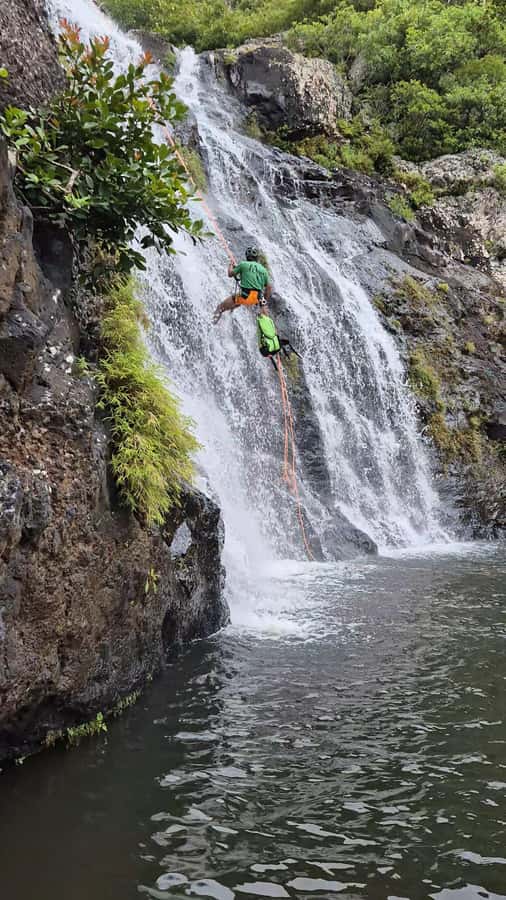
Tamarind Falls is not a viewpoint you simply admire from a path. Here, you work your way down through the 7 Cascades area by rope, water, and rock, with abseils of 10, 15, and 25 meters. Optional cliff jumps add a jolt of fun, while Freddy, Jees, and other certified guides keep the mood light and the safety rules clear.
I like two things right away: the activity gives you a close look at Mauritius’ waterfalls rather than a quick photo stop, and local food, fruit, photos, and videos are included. The guides are also praised for their calm encouragement, jokes, singing, and help on the forest sections. The main drawback is simple: this is not a soft adventure. You need a reasonable level of fitness, sturdy shoes, and a clear head around heights.
Key things to know before you book
- Three hours on ropes and water: The route includes several abseils, forest movement, waterfall scenery, and a final walk out.
- Three main abseil heights: You may descend 10, 15, and 25-meter sections, depending on the activity plan and your comfort.
- Cliff jumps are optional: You can add extra excitement, but you are not required to jump.
- Small-group feel may be possible: Past groups have been as small as two to four people, with six as the stated maximum in one account, though group size should be confirmed when booking.
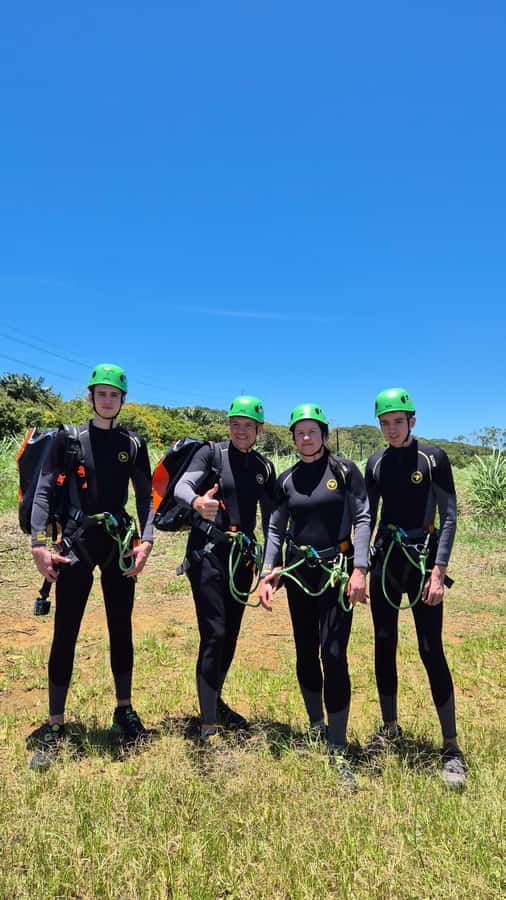
- Safety equipment is supplied: Harnesses, ropes, wetsuits, life jackets, waterproof storage, and other canyoning equipment are provided.
- Bring proper footwear: Slippers and bare feet are not allowed. You need comfortable shoes that can handle wet ground.
Tamarind Falls by rope, not just by viewpoint
Tamarind Falls, also known as 7 Cascades, is one of Mauritius’ best settings for a more active day outdoors. The experience takes you into the waterfall system itself, where the scenery unfolds from above, beside the drops, and along the forest route.
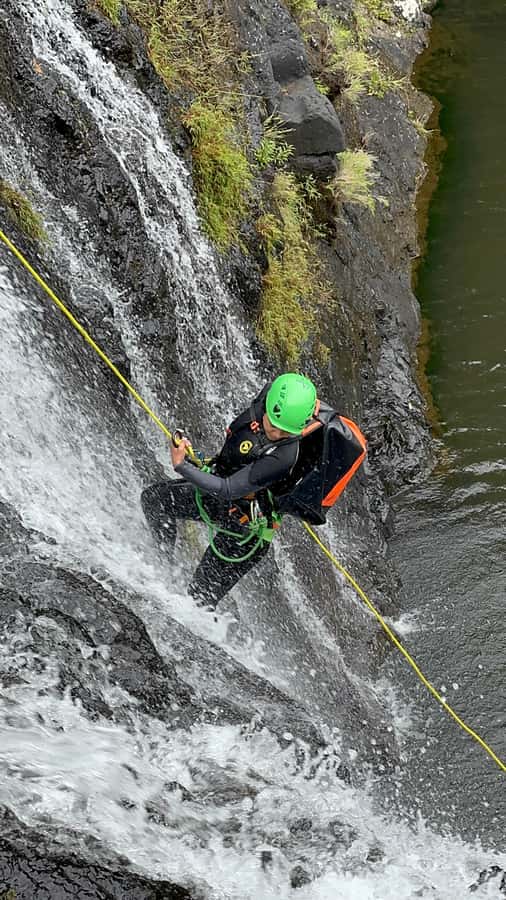
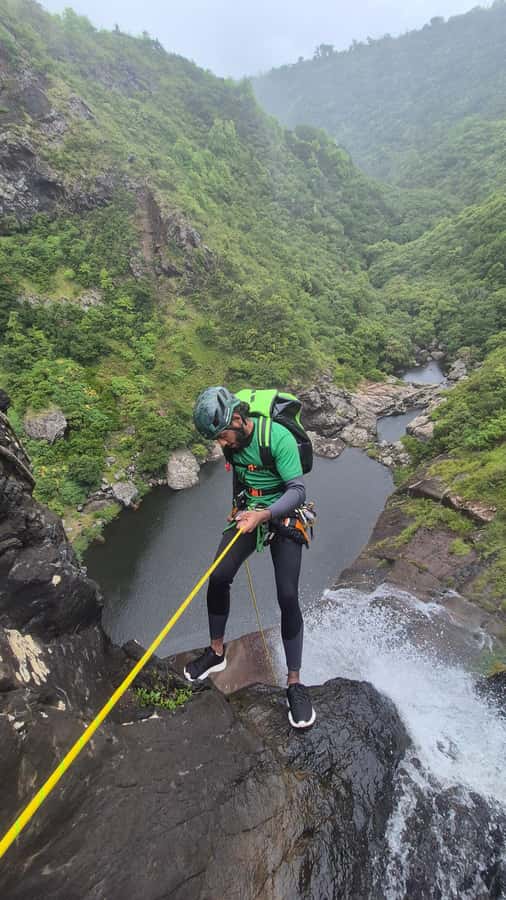
The central activity is abseiling, or rappelling, down rock faces using ropes and a harness. The planned drops range from 10 to 25 meters. That range matters because you get a gradual introduction rather than being sent straight toward the largest descent. A 10-meter drop may feel like a useful first test. The 15-meter and 25-meter sections then give the outing a stronger sense of achievement.
You are monitored by certified instructors throughout the activity. That does not remove the natural nerves. It does mean you have someone checking the equipment, explaining the rope system, and helping you place your feet when the rock feels less cooperative than it looked from above.
I especially like that the adventure is not reduced to one dramatic descent. You move through a mix of rope work, water, forest, and open views. The result feels more like a compact canyoning outing than a single zip-line-style thrill.
Other Mauritius days people book alongside this one:
- Mauritius: Ile Aux Cerfs Catamaran Trip w/ Lunch & Transfer
★ 4.3 · 1,922 reviews - Mauritius: Full-Day Catamaran Cruise to the Northern Isles
★ 4.7 · 1,798 reviews - Île aux Bénitiers: Snorkeling w/Dolphins Boat Tour & Lunch
★ 4.0 · 1,635 reviews
Meeting at Henrietta Cemetery at 9:30 a.m.
The meeting point is at the start of Henrietta Cemetery. Look for the grey wall on the left and the sugarcane field on the right. That description is more useful than a vague place name, but you should still follow the supplied GPS carefully and allow time to find the start without rushing.
The meeting time is 9:30 a.m. Once you meet the guides, you follow their directions for safe parking before getting changed and equipped. Transportation is not included, so you need to make your own way to Henrietta.
That arrangement keeps the price focused on the activity itself, but it adds a planning task. If you are staying elsewhere in Mauritius, check your driving route and allow enough time for parking and preparation. A late arrival would be especially awkward on an activity that depends on equipment checks and group instructions.
The guides may include Freddy and Jees, names repeatedly associated with a reassuring and cheerful style. Ben has also guided this outing. The most useful quality is not simply friendliness. You want instructors who can make instructions easy to follow when you are standing at the top of a drop, and that is where these guides receive their strongest praise.
The safety briefing and gear check
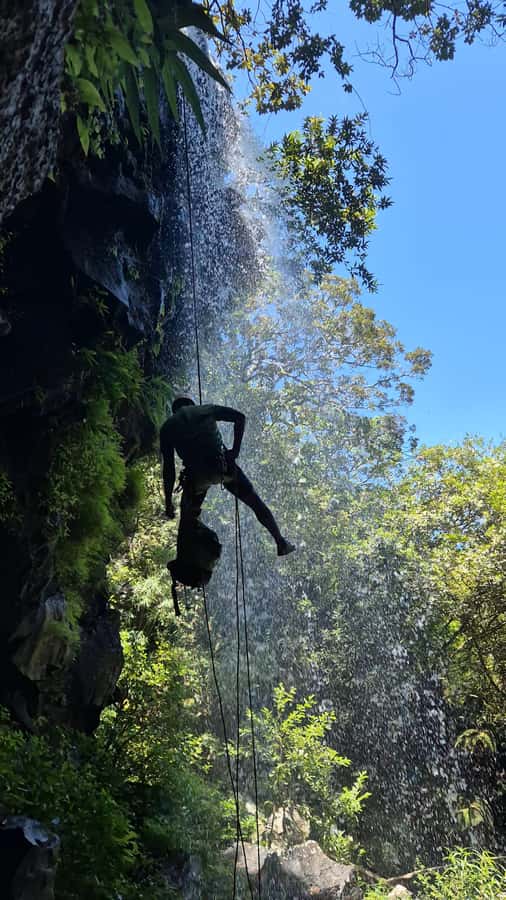
Before the route begins, the guides explain the canyoning equipment, ropes, and procedures. Take this part seriously, even if you have used a harness before. The briefing is where you learn how to move, where to place your feet, and how to respond to the guide while attached to the rope.
The supplied equipment includes canyoning gear, ropes, harnesses, wetsuits, life jackets, and a waterproof bag or container. The life jacket and wetsuit are practical rather than decorative. Water and spray are part of the setting, and a wet route can feel much cooler than the tropical weather suggests.
You need to bring:
- Swimwear
- Comfortable shoes
- A change of clothes
- Drinking water
- Sunscreen
- Insect repellent
Do not arrive in slippers, and do not plan to go barefoot. Shoes are not supplied, so this is one of the most important details to handle before the morning begins. Choose footwear that fits securely and can cope with wet rock and forest paths.
The supplied information does not specify a shoe model, so I would focus on fit and grip rather than fashion. You will be moving around ropes and uneven ground, and loose footwear is a needless problem.
Abseils of 10, 15, and 25 meters
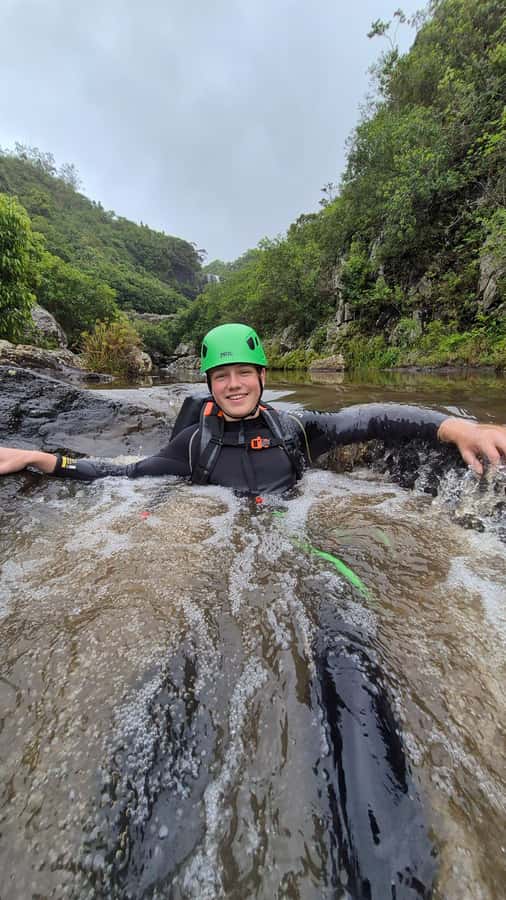
The heart of the outing is the series of descents. The heights are listed as 10, 15, and 25 meters, giving the activity a clear progression. You are not simply looking down at a waterfall, you are controlling your descent beside it.
For a beginner, the first abseil is likely to be the point where the instructions become real. Leaning back into a harness can feel unnatural, especially when your feet are on a wet wall and the ground seems far away. A good guide will keep the directions short and help you move one step at a time.
The longer drops provide the bigger sense of accomplishment, but they also make the height restrictions important. This is not suitable for people with vertigo or a strong fear of heights. The activity is described as suitable for beginners, but beginner-friendly does not mean effortless or low-adrenaline.
The guides are there to monitor you, but you still need to listen, stay engaged, and manage your own nerves. Participants have especially valued the way Freddy and Jees reassure people through the abseils and forest sections. That kind of encouragement can make the difference between an exciting challenge and an unpleasant morning.
The activity also includes movement through the canyon and surrounding forest. This means the outing is physical even when you are not on the rope. Expect climbing over or around natural obstacles, walking on uneven ground, and using your balance. The exact route may vary with conditions and the group.
Same island, a completely different day out:
- Mauritius: Private Southwest Chamarel Highlights Tour
★ 4.8 · 1,427 reviews - Mauritius: Private South-West Nature & Viewpoints with Lunch
★ 4.8 · 1,129 reviews - Trou d’Eau Douce: 5 Island Adventure with BBQ & Snorkeling
★ 4.7 · 1,052 reviews - Mauritius: Private South Tour with Pickup
★ 4.9 · 940 reviews
Optional cliff jumps for extra nerve
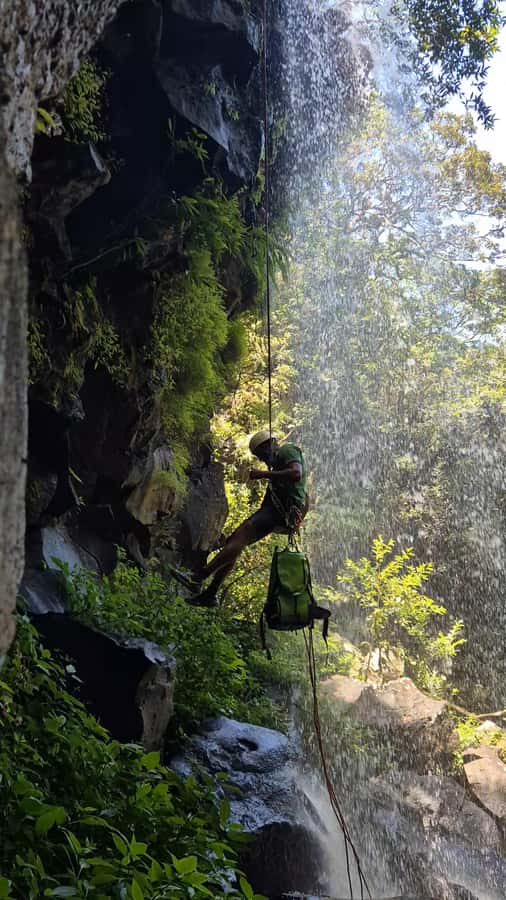
Cliff jumps are offered as an option. They are not compulsory, which is important because abseiling already provides plenty of excitement. If you want a second kind of thrill, the jumps add a quick, committed moment after the slower concentration of a rope descent.
I like the optional format because it lets you choose your own level of adventure. You can enjoy the waterfalls and abseils without proving anything to the group. If you do choose to jump, follow the guide’s instructions closely and do not treat the moment as a contest.
The guides’ role matters here, too. The outing has been praised for an encouraging atmosphere, with jokes and good humor helping people feel at ease. That can be useful when a group includes mixed confidence levels. One person may be eager to jump, while another may be perfectly happy to watch.
Waterfalls, forest, and the 55-meter final drop
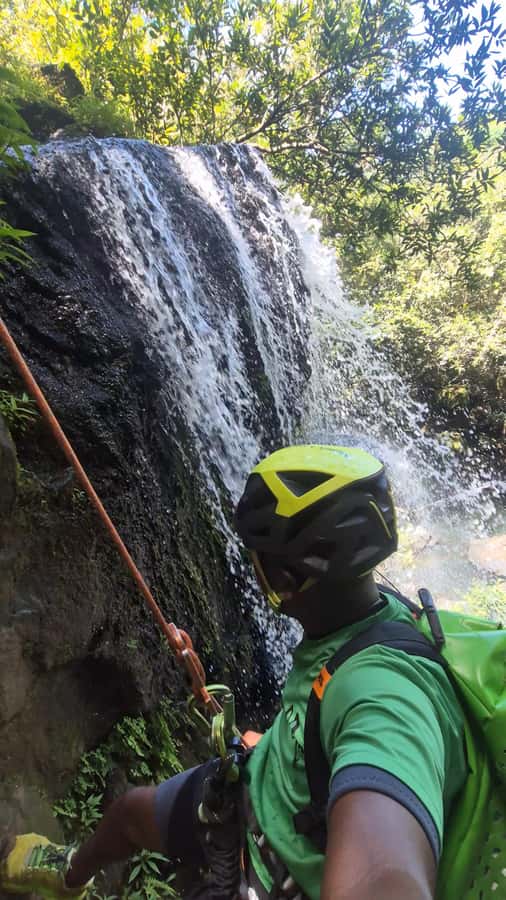
The scenery is one of the main reasons to choose this experience over a standard walk to a waterfall. You see the cascades from unusual angles, with the ropes bringing you close to the rock and falling water.
The last waterfall is 55 meters high. You do not abseil down this final drop as part of the described activity. Instead, you see it from the top before taking the route out. That is a worthwhile closing view because it gives you a sense of the scale of the waterfall system after spending the morning among smaller drops.
The forest sections add a different pace. You are no longer focused only on rope technique, and the guides explain, joke, and help the group move through the route. Several participants especially liked this mixture of action and relaxed local company.
The scenery is beautiful, but keep your expectations practical. This is an outdoor canyoning environment, not a polished attraction with paved platforms and dry walkways. Wet rocks, insects, changing footing, and physical effort are part of the deal. Bring mosquito repellent and expect to get wet.
A 20-minute walk back to the car
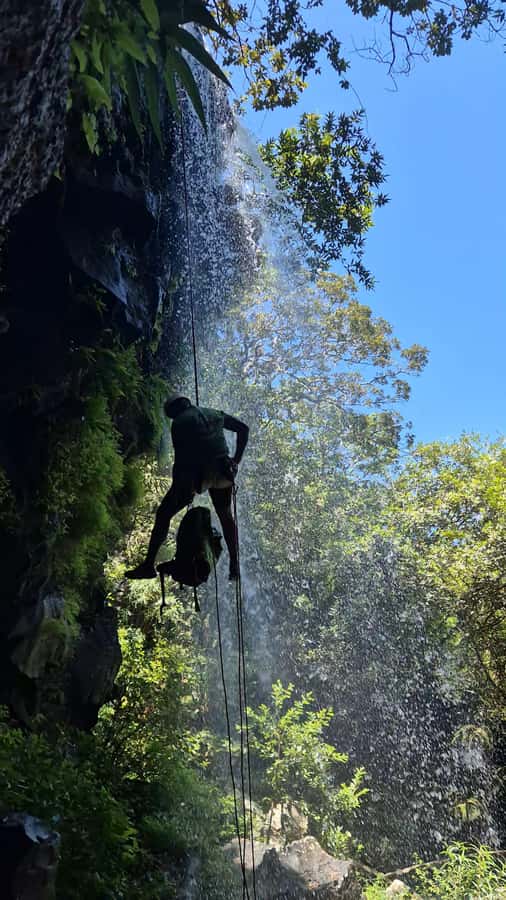
When the abseiling and canyoning are finished, you need to walk for about 20 minutes to return to the car parking area. This is easy to overlook when you focus on the waterfalls, but it affects how you should plan your day.
The walk is part of the outing rather than a separate transport transfer. You will already have spent around three hours moving through the canyon, so tired legs are possible. Comfortable shoes are essential here, not only during the rope sections.
The activity ends back at the original meeting point. That makes the logistics tidy for anyone driving themselves. You can change into dry clothes at the end, collect your belongings, and continue with the rest of your day.
Local snacks and the human side of the outing
Food is included, with local snacks and fruit offered during or after the activity. This is a small detail, but it gives the day a more personal feel than a purely technical adventure. A simple snack also makes sense after several hours of physical activity.
The guides are not presented as distant instructors who only issue commands. Freddy and Jees are known for singing, joking, explaining things in an easy way, and taking care of the group. Photos and videos are also offered, allowing you to keep a record of the abseils and jumps without trying to handle a phone around ropes and water.
That service adds value, especially because you are unlikely to want to carry your own camera through the wet sections. Ask how the photos and videos will be delivered if that matters to you, since the supplied details do not specify the format or timing.
The small-group setup described by one participant, commonly two to four people and up to six, would be a strong advantage if it applies to your date. Smaller groups usually mean more direct help at each descent and less waiting. Still, confirm the actual group size before booking, since it is not presented as a guaranteed feature for every departure.
Is $140 a fair price?
The cost is $140 per person. That is not a low-cost walk, but the price includes the main technical needs: canyoning equipment, ropes, harnesses, wetsuits, life jackets, waterproof storage, local food, and photos and videos.
You are also paying for certified instruction and supervision during an activity where proper equipment and clear guidance matter. If you were comparing it with a simple waterfall hike, the price would look high. That is the wrong comparison. The more useful comparison is with a guided technical outdoor activity where gear, instruction, safety monitoring, and media are bundled together.
Transportation is not included, and you must provide shoes, water, sunscreen, and insect repellent. Those extras are easy to manage, but they mean the final cost is slightly above the headline price once you add your own transport.
For someone who wants to see Tamarind Falls actively and values a small, friendly guide team, I consider $140 reasonable. For someone who only wants waterfall views and does not care about rope work, a hiking option would make better financial sense.
Who should choose this adventure?
This outing suits a fit beginner who wants a real challenge without needing previous abseiling experience. The instructors provide the gear and explain the process, so you do not need to arrive as an expert.
It is a good match if you enjoy:
- Waterfalls viewed from close range
- Rope descents and moderate physical effort
- Optional jumps
- Small-group outdoor activities
- Friendly guides who keep the mood relaxed
- Photos and videos included in the price
It is not suitable for pregnant women, wheelchair users, people with back problems, people with high or low blood pressure, people with vertigo, people afraid of heights, or people with a low level of fitness. Those limits are not minor footnotes. The activity combines height, uneven ground, water, and physical movement.
When booking, you need to send your age, height, and weight. This information helps the provider prepare the right equipment and judge whether the activity is appropriate.
The experience is available in English and French. You can cancel up to 24 hours in advance for a full refund, and reserve now while paying later, which gives you some flexibility while arranging your Mauritius plans.
Should you book Tamarind Falls abseiling?
I would book this if you want more than a scenic stop and are comfortable treating the day as a physical adventure. The strongest reasons are the range of abseils, the optional jumps, the close waterfall views, and the guides’ highly reassuring style, especially Freddy and Jees.
I would skip it if heights make you freeze, if you have a medical restriction listed above, or if you want a relaxed outing in dry clothes. Also remember that you arrange your own transport and bring your own shoes, water, sunscreen, and insect repellent.
For an active first canyoning experience in Mauritius, this offers a good balance: serious enough to feel memorable, but structured enough for beginners. The 55-meter final waterfall, local snacks, and guide-provided photos give the three-hour outing a satisfying finish.
FAQ
Where does the abseiling activity meet?
The meeting point is at the start of Henrietta Cemetery. Look for the grey wall on the left and the sugarcane field on the right.
What time does the activity start?
The meeting time is 9:30 a.m.
How long does the activity last?
The abseiling and canyoning activity lasts about three hours. Afterward, you need around 20 minutes to walk back to the car parking area.
How high are the abseils?
The activity includes abseils of 10, 15, and 25 meters.
Are cliff jumps required?
No. Cliff jumps are optional, so you can choose whether to add them.
Is the activity suitable for beginners?
Yes. The activity is described as suitable for beginners and is supervised by certified instructors.
What equipment is included?
Canyoning gear, ropes, harnesses, wetsuits, life jackets, and a waterproof bag or container are provided.
What should I bring?
Bring swimwear, comfortable shoes, a change of clothes, drinks, sunscreen, and insect repellent. Slippers and bare feet are not allowed.
Is transportation included?
No. You need to arrange your own transportation to and from the meeting point.
Just added around Mauritius
- Whale & Dolphins Swimming – Private Speedboat Exclusive Tour★ 4.2 · 3 reviews
- Black River: Guided Hike in the Black River Gorges Valley★ 4.0 · 6 reviews
- Walking under the sea in Mauritius with transfer★ 3.4 · 7 reviews
- Mauritius: Watersport Adventure Day with Lunch and Pickup★ 3.9 · 3 reviews
- Mauritius: Private Full Day Tour with Entry Tickets & Lunch★ 4.4 · 12 reviews
- Tea Route: Lake, Forest, Tea Plantation & 3 Course Lunch★ 3.6 · 7 reviews
- Unveiling the Ancient and Modern Port Louis – city tour★ 4.7 · 13 reviews
- Trou d’Eau Douce: Waterfall and Ile aux Cerfs Day Trip★ 4.6 · 9 reviews