
Reviewed · HISTORICAL TOURS
Full Day-Port-Louis Cultural Tour
Port Louis is not a city you understand from a car window, yet a first visit can feel scattered without local direction. This private tour connects Hindu, Chinese, Christian, colonial, and Indian indenture history in one day, from Père Laval’s Shrine to Aapravasi Ghat.
I like the private air-conditioned vehicle and the chance to shape the day with your guide. I also like the mix of free sights, museums, a market, and lunch time at Caudan Waterfront. The main caution is that lunch and museum admission cost extra, and one past booking suffered a serious pickup failure.
Key points at a glance
- Père Laval’s Shrine and Kaylasson Temple: Two short visits that show the religious variety of Mauritius.
- Kwan Tee Pagoda: A calm Chinese temple near the capital, described as the oldest pagoda in Mauritius and the Southern Hemisphere.
- Blue Penny Museum: The tour’s most focused stop for stamps, maritime travel, colonial-era Mauritius, and the story of Paul and Virginie.
- Aapravasi Ghat: A powerful site linked to the indentured labor system that replaced slavery on sugar plantations.
- Flexible private touring: Guides such as Vish and Jean Philippe have been praised for being friendly, punctual, and adaptable.
- Budget watch: The $111.58 group price covers transport and guiding, but not lunch, drinks, or Blue Penny Museum admission.
Why this Port Louis day works for first-time visitors
Port Louis is the political and commercial center of Mauritius, but its most important places are spread through different parts of town. This tour gives you a useful first outline: faith, trade, migration, postal history, colonial buildings, and modern waterfront life.
You travel in a private, air-conditioned vehicle with hotel pickup and drop-off. That matters in Mauritius, especially when you are starting from Trou d’Eau Douce and want someone else to handle the road connections. You are not joining a large coach group, and only your own party takes part.
The day lasts roughly 6 to 7 hours. The schedule is full, but most sightseeing stops are short. You will spend about 20 minutes at Père Laval’s Shrine, 20 minutes at Kaylasson Temple, 20 minutes at Kwan Tee Pagoda, 30 minutes at the Central Post Office, 20 minutes at Central Market, 30 minutes at Aapravasi Ghat, and about an hour at the Blue Penny Museum. Caudan Waterfront receives the longest break, about 90 minutes, including time for lunch.
That design suits you if you want orientation rather than a slow, specialist visit to one museum or temple. It also gives your guide room to explain connections between places that might seem unrelated on a map.
A few more Trou dEau Douce trips to weigh up
- Dodo’s Trail: Discover Mauritius’ Heritage & Creole Lunch
★ 4.5 · 105 reviews - Mauritius: Le Morne Brabant Hike with Historical Immersion
★ 4.8 · 27 reviews - Historical Guided Day Tour : City – Sugar World – Botanical Garden
★ 4.5 · 20 reviews
Père Laval’s Shrine and the island’s shared faith
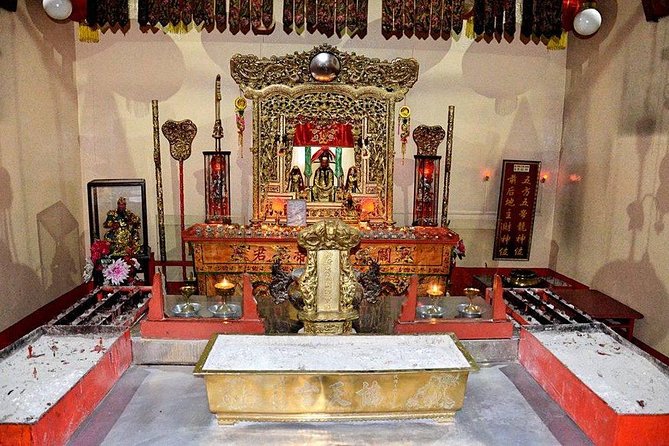
The first stop is Père Laval’s Shrine, one of Mauritius’s best-known religious landmarks. People of different backgrounds and religions come here to pray, so this is more than a quick architectural photo stop.
You have about 20 minutes, which is enough to pause and take in the setting without making the visit feel like a formal religious tour. I would treat it as an introduction to Mauritius as a place where several faiths live side by side.
The short timing is also a limitation. If you want a quiet period for prayer or personal reflection, tell your guide early. The tour has many stops to cover, so this is not designed as an extended pilgrimage visit.
Kaylasson Temple and its six symbolic stations
At Kaylasson Temple, the attraction is both spiritual and visual. The temple was built in a Tamil tradition and includes six stations that symbolize the organs of the human body.
The idea behind the layout is memorable: a worshipper entering these spaces should respect the temple as if it were the body itself. That gives the visit a useful point of focus instead of leaving you to simply admire the decoration.
You get about 20 minutes here. Wear clothing that allows you to enter a religious site respectfully, even though the stated dress code is relaxed. Your guide can help explain the meaning of the six stations, and this is one place where a good guide adds real value.
The visit is not a long temple study. If your main reason for booking is religious architecture, you may want a slower, more specialized outing. For a city overview, though, it is a compact and worthwhile stop.
Kwan Tee Pagoda, an oasis beside Port Louis
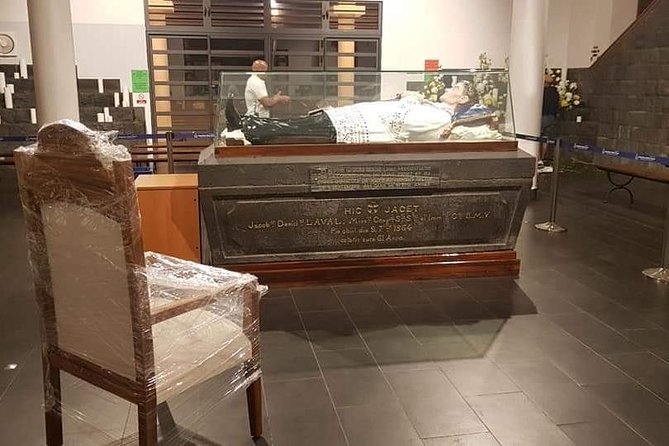
Kwan Tee, also called Guan Di Pagoda, is described as the oldest pagoda in Mauritius and the oldest in the Southern Hemisphere. It faces the sea and sits with mountains behind it, while coconut trees and seasonal fruit trees surround the grounds.
The setting gives you a break from the city’s busy streets. The pagoda is presented as a peaceful place for meditation, and the gardens make this visit feel different from the shrines and historic buildings elsewhere on the route.
The planned stop is about 20 minutes. The supplied schedule contains a clear error, listing 20 hours, which cannot fit a 6 to 7 hour tour. Plan on a short visit of roughly 20 minutes and confirm the timing with the operator if this stop is especially important to you.
As with Kaylasson Temple, this is an active spiritual place, not just a monument. Keep your voice low, follow your guide’s instructions, and avoid treating the grounds like a rushed photo set.
Same island, a completely different day out:
- Mauritius: Ile Aux Cerfs Catamaran Trip w/ Lunch & Transfer
★ 4.3 · 1,922 reviews - Trou d’Eau Douce: 5 Island Adventure with BBQ & Snorkeling
★ 4.7 · 1,052 reviews - Mauritius: Catamaran Cruise to Ile Aux Cerfs with BBQ Lunch
★ 4.3 · 925 reviews - South-West of Mauritius Private Full-Day Scenic Tour
★ 4.5 · 421 reviews
The Central Post Office and Mauritius in miniature
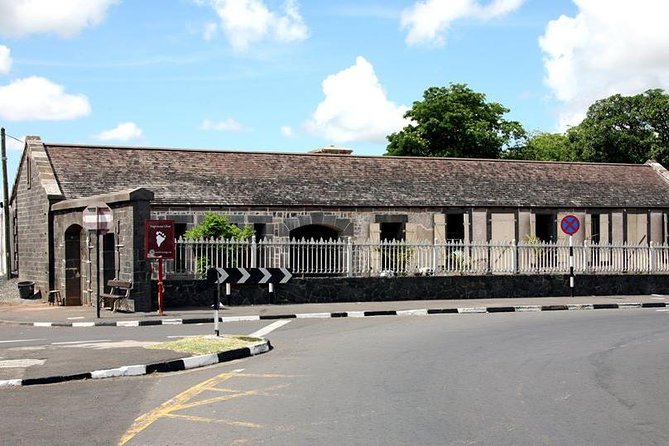
The Port Louis Central Post Office, also called the General Post Office, dates from the early colonial period. The building was erected in 1868 and inaugurated in December 1870 by Governor Gordon.
Today, it functions as a Postal Museum, with displays about postal services in Mauritius. You may also see links to railway history, since railway stations once served as post offices in certain parts of the island.
This stop lasts around 30 minutes and is a good example of how the tour moves beyond grand monuments. A post office may sound ordinary, but here it connects communications, colonial administration, transport, and the growth of Port Louis.
The road in front of the building has also changed. The broad open space once visible in front of the colonial structure has been replaced by a motorway. That contrast gives you a small but telling reminder that Port Louis is a working capital, not a preserved museum town.
Caudan Waterfront, lunch, and your best pause
Caudan Waterfront is the tour’s main break. You have about 1 hour and 30 minutes to eat lunch on your own and walk around at your own pace, with views over Port Louis Bay from the Deck area.
Lunch is not included, so budget separately for food and drinks. The tour does not specify a fixed restaurant or meal, which gives you freedom but also means the final cost depends on what you choose.
I like this pause because the rest of the day moves quickly. After several religious and historic stops, you can sit down, eat, and reset before returning to museums and the market.
Do not mistake the waterfront for the old city itself. It is a more modern commercial area, while the Central Market and older buildings provide a stronger sense of daily Port Louis life. Used together, the two stops show different sides of the capital.
Central Market and everyday Port Louis
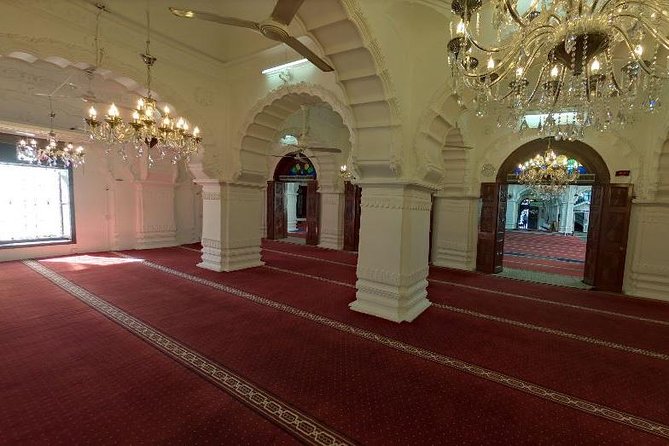
The Central Market is a brief 20-minute visit, but it brings a different kind of history to the day. You can expect fruit, vegetables, souvenirs, Chinese herbal medicines, and aphrodisiacs.
This is the place to keep your senses open and your pace practical. You may find it crowded or intense, and 20 minutes is not long if you want to browse carefully. Still, the market gives you a look at ordinary commerce that polished sightseeing areas cannot provide.
If you want souvenirs, this is one of the stops where you can compare items before buying. I would avoid spending your whole shopping budget immediately, since the schedule includes several other places and the stop is short.
The market is also a good point to ask your guide about unfamiliar foods or products. A private guide can make a quick market visit more useful by explaining what you are looking at.
Blue Penny Museum and the famous Mauritius stamps
The Blue Penny Museum is the tour’s main indoor history stop. It is devoted to the art and history of Mauritius and begins with maritime exploration in the Indian Ocean.
The displays then cover the island’s three colonial periods before turning to Port Louis in the 18th and 19th centuries. The museum also explains the history of postal services, including the first postage stamps issued in Mauritius, the famous Post Office stamps.
The final part tells the tragic story of Paul and Virginie, a mythical couple closely linked with Mauritius. You have about an hour here, which is the most generous museum visit of the day.
Admission is not included in the tour price. That is important when comparing the apparent bargain of the $111.58 group rate. Add the museum ticket, lunch, drinks, and any gratuity you choose before judging the total cost.
For me, this is likely the most useful stop if you want context. The temples and market show pieces of Mauritian life, while the museum connects them to exploration, colonial rule, communications, and local storytelling.
Aapravasi Ghat and the difficult story of indentured labor
Aapravasi Ghat is one of the most serious stops on the route. The 1,640-square-meter site in Port Louis marks the beginning of the modern indentured labor diaspora.
In 1834, the British government selected Mauritius as the first site for its experiment using so-called free labor to replace enslaved labor. From 1834 to 1920, almost half a million indentured laborers arrived from India at Aapravasi Ghat.
Many went to work on Mauritius’s sugar plantations. Others were sent onward to Réunion, Australia, southern and eastern Africa, or the Caribbean. The site therefore connects Mauritius to a much wider migration system.
You have about 30 minutes here. That is enough to understand the site’s importance, but not enough for a long historical study. I would pay close attention to your guide and use the visit as a reason to read more afterward if this part of Mauritian history matters to you.
Aapravasi Ghat gives the day moral and historical weight. Without it, the tour could feel like a sequence of attractive buildings and shopping stops. With it, you see how labor, empire, migration, and sugar shaped the island.
What the private guide adds
The guide can make or break a tightly scheduled city tour. Vish has been praised for being lovely, helpful, and good at giving an overview of the city. Jean Philippe was also praised for setting out the day clearly, explaining what to expect, and handling the route effectively.
Another guide allowed a group to change the plan, dropping some churches and shrines in favor of the Seven Colored Earths at Chamarel. That flexibility can be useful, but it also shows why you should confirm the route before departure. Chamarel is not part of the stated Port Louis itinerary.
The service is described as sometimes multilingual, in English and French. If you have a strong language preference, request it when booking rather than assuming it will be available.
The driver-guide role also means your guide may shape the pace. Tell the guide which stops matter most to you. If you care most about the Blue Penny Museum and Aapravasi Ghat, say so. If religious sites are your priority, ask for enough explanation at Père Laval’s Shrine, Kaylasson Temple, and Kwan Tee Pagoda.
Price, group size, and what you really pay
The listed price is $111.58 per group of up to three people. Since this is a private tour, that can be good value for a couple or small group, especially when you consider hotel pickup, air-conditioned transport, a driver-guide, and a full day of city sightseeing.
The price becomes less attractive if you are alone, although the booking information says a minimum of two people is required. There is also a conflict in the supplied details: one part says the group can include up to three people, while another says the maximum is two. Confirm the permitted group size before paying.
The base rate does not include lunch, drinks, Blue Penny Museum admission, or gratuities. Souvenir photos or DVDs may be available as paid upgrades. These extras are not essential to the sightseeing, but they can raise your final cost.
At $111.58 for a private group, the tour offers convenience rather than the absolute cheapest way to see Port Louis. You are paying for one organized day, hotel transfers, and the ability to discuss the route with your own guide.
Timing, walking, and small practical points
The tour involves some walking, and a moderate level of physical fitness is advised. The schedule is not described as strenuous, but you should expect to get in and out of the vehicle repeatedly and walk around temples, historic sites, the market, and the waterfront.
The dress code is listed as fully relaxed, but religious sites still call for respectful clothing and behavior. Comfortable shoes will help more than formal clothing.
Children must be accompanied by an adult, and the minimum age is 14. If you need vegetarian food, mention it at booking. Lunch is on your own, so the operator needs to know about dietary requirements in advance.
Hotel pickup and drop-off are included. Because one booking had a missed pickup and the guests waited until 9:30 a.m. before the hotel called the operator, I would confirm the pickup time and meeting point the day before. This is not a minor detail when you are leaving from Trou d’Eau Douce for a full day in Port Louis.
Free cancellation is available until 24 hours before the start time. Changes or cancellations made inside that window are not accepted for a refund.
Who should book this Port Louis tour?
You should consider it if you are visiting Mauritius for the first time and want a broad introduction to Port Louis without arranging several separate taxis, museum visits, and temple stops.
It suits couples, small families with older children, and anyone who values private transport and a flexible guide. It is also useful if you want both famous sights and serious historical context, especially at Aapravasi Ghat and the Blue Penny Museum.
You may want another option if you prefer long visits at each site, dislike shopping stops, or want a tour devoted mainly to architecture. The 6 to 7 hour schedule covers a lot, but several visits last only 20 minutes.
The rating supplied for this experience is 3.7 out of 5, with strong praise for friendly and punctual guides but also one major pickup complaint and one mixed reaction to the destinations. That balance feels fair: the guide and private transport can make the day work well, but the route is an overview, not a collection of spectacular attractions.
My booking verdict
I would book this tour if I wanted a practical first look at Port Louis and cared about the city’s cultural mix more than postcard scenery. The best parts are the private vehicle, the guide’s ability to explain unfamiliar places, the Blue Penny Museum, and the weighty story of Aapravasi Ghat.
Before booking, confirm three things: the exact pickup time, the maximum group size, and the current Blue Penny Museum admission fee. If you are happy to pay separately for lunch and museum entry, this is a sensible one-day introduction. If you want a slower, more focused experience, choose a shorter private tour built around the two or three places you value most.
FAQ
How long does the Port Louis Cultural Tour last?
The tour lasts approximately 6 to 7 hours.
Where does the tour take place?
The tour visits Port Louis, Mauritius, with pickup offered from your hotel. The experience is associated with Trou d’Eau Douce.
Is hotel pickup and drop-off included?
Yes. Hotel pickup and drop-off are included in the tour.
Is the tour private?
Yes. It is a private activity, and only your group participates.
What type of vehicle is used?
Transport is provided in a private, air-conditioned vehicle.
Is lunch included?
No. Lunch and drinks are not included. You have free time to eat at Caudan Waterfront.
Is Blue Penny Museum admission included?
No. Entrance to the Blue Penny Museum is not included in the tour price.
Which places are visited?
The route includes Père Laval’s Shrine, Kaylasson Temple, Kwan Tee Pagoda, Port Louis Central Post Office, Caudan Waterfront, Central Market, Blue Penny Museum, and Aapravasi Ghat.
What languages may the guide speak?
The guide may be multilingual, with English and French listed as possible languages.
Can I cancel for a full refund?
Yes, if you cancel at least 24 hours before the experience start time. Cancellations or changes made less than 24 hours before the start time are not accepted for a refund.
Just added around Trou dEau Douce
- Trou d’Eau Douce: Waterfall and Ile aux Cerfs Day Trip★ 4.6 · 9 reviews
- Île aux Cerfs: Private Catamaran Cruise with Gourmet Lunch★ 5.0 · 10 reviews
- The beautiful East of Mauritius:incl Blue-Bay Marine Park, Crocodile park &Lunch★ 4.0 · 7 reviews
- The Wild East of Mauritius: Full-day tour including 2-hour Quad-Biking & Lunch★ 3.5 · 11 reviews
- The Gorgeous East: Bois Cheri Tea factory, Rhumerie St-Aubin, Mahebourg & Lunch★ 4.0 · 5 reviews
- The Hidden Treasures of Mauritius, ALL INCLUSIVE Day Trip, Private SUV Car★ 5.0 · 13 reviews
- Tea and Culture Route★ 4.5 · 3 reviews
- The Adventure East of Mauritius: 3-Watersport Activities & Blue-Bay Marine Park★ 4.0 · 3 reviews
Historical Tours, compared.
Dodo’s Trail: Discover Mauritius’ Heritage & Creole Lunch
Read our review →
Historical Guided Day Tour : City – Sugar World – Botanical Garden
Read our review →
Historical Private Guided Tour, City-SugarWorld-Botanical Garden – Min.2 persons
Read our review →
Cultural Delights & Heritage Treasures in the City
Read our review →
Browse the lists this tour appears in